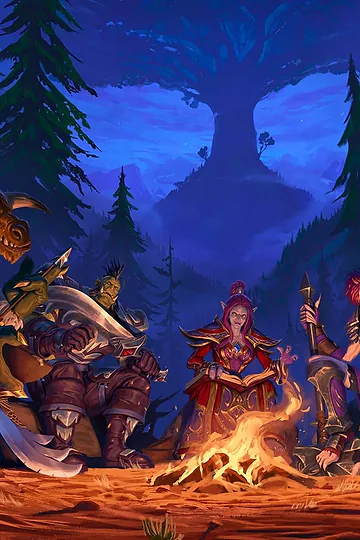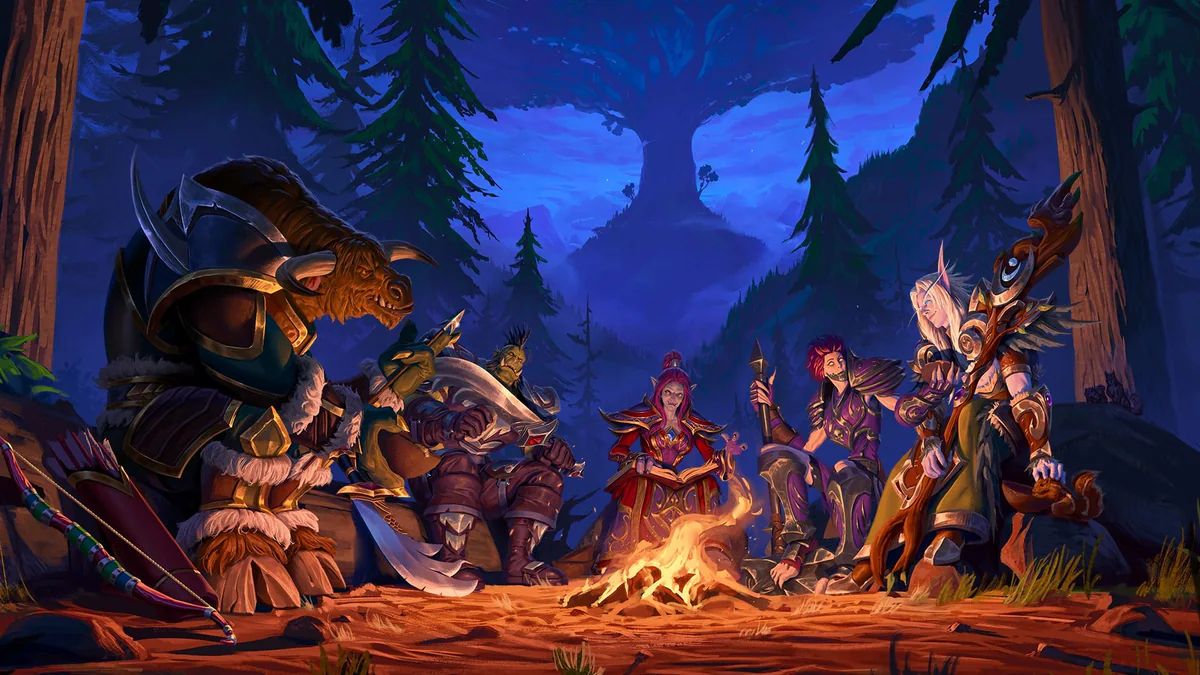
On November 23, 2004, people queued outside shops at midnight across North America for a box with an orc on it. Within weeks Blizzard's servers were so full that players waited in log-in queues just to get into the game. World of Warcraft had arrived, and online role-playing games were about to go from a hobby for the devoted to something your coworkers talked about at lunch.
Making MMORPGs friendly
Online worlds like EverQuest and Korea's Lineage had come first (see our Lineage story), but they could be harsh. Dying cost you hours of progress, and finding something to do could be a chore. Blizzard smoothed every edge:
- Quests everywhere, with clear goals so you always knew what to do next.
- Rested XP, which rewarded you for taking breaks rather than punishing you.
- A bright, stylised art style that ran on modest PCs and still looks good today.
- Dungeons and raids that made teamwork the high point of the game.
Leeroy Jenkins
In 2005 a video showed a guild carefully planning an attack on a dungeon room, until one player, back from being away from his keyboard, charged in shouting "Leeeeroy Jenkins!" and got everyone killed. It became one of the internet's first great gaming memes. It was later revealed to be staged, but nobody minded.
Peak Azeroth
WoW's subscriber count peaked at about 12 million in 2010, a number no subscription MMORPG has matched since. In Korea, where it launched in early 2005, it was a rare Western MMORPG that competed in PC bangs with local giants.
The legacy
World of Warcraft showed that an online world could be mainstream entertainment. Many of its ideas, like quest hubs, daily rewards, group finders and seasons, are now standard in games far beyond MMORPGs. Twenty-two years on, it's still running, and in November 2026 its latest chapter, World of Warcraft: Forever, left early access (see our November releases guide).