

G-STAR 2026 Day One: An AI Chatbot Takes Center Stage as Korea's Giants Sit Out
WGC News is in Busan. Our first look at G-STAR 2026: an AI story app as main sponsor, global publishers in Hall 2, Nexon, NCSOFT and Netmarble off the floor, and a G-CON packed with star storytellers.
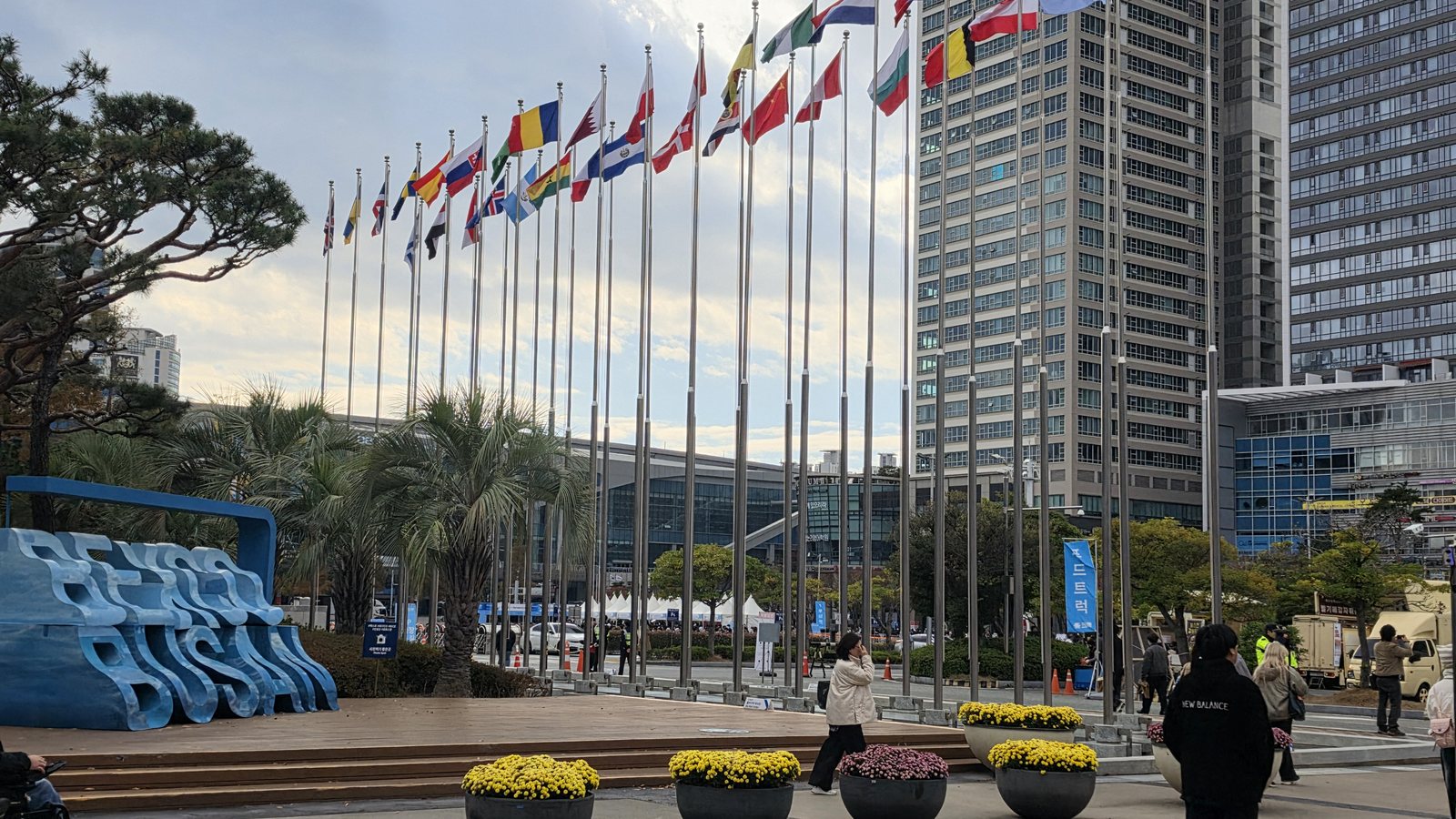
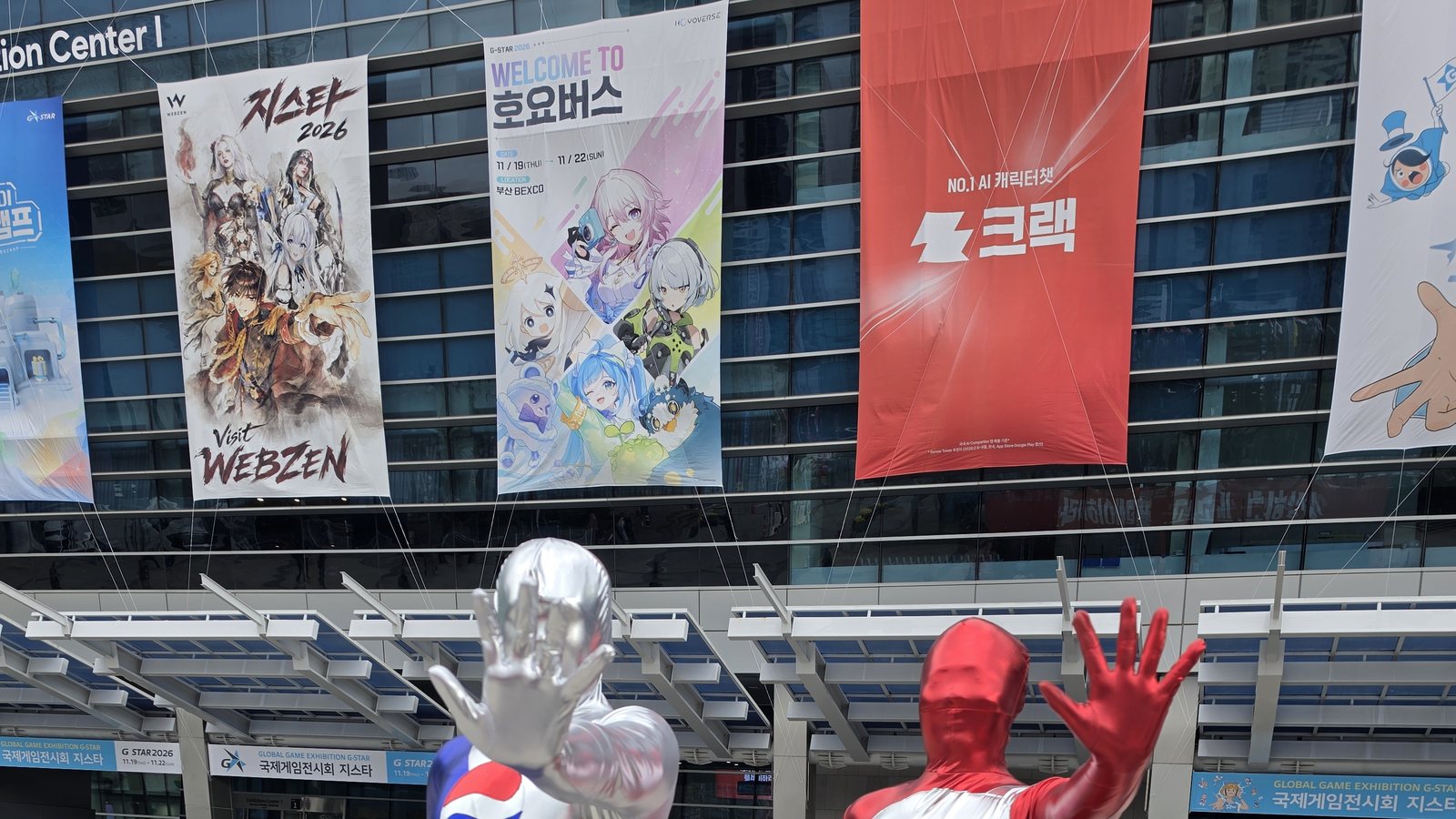
The first thing you see at BEXCO on G-STAR morning is not a game. It is a row of national flags snapping in the wind over the plaza, a big blue BUSAN sculpture, and potted chrysanthemums lined up like a welcome party. Then you look up at Exhibition Center 1, and the show announces itself in three giant banners: Webzen's "Visit WEBZEN" artwork, HoYoverse's "Welcome to HoYoverse" poster with the show dates (19 to 22 November, Busan BEXCO), and a bright red banner for Crack that calls itself the "No.1 AI character chat."
That third banner tells you most of what is new about G-STAR 2026. WGC News is in Busan for all four days as accredited press, and this is our first look at Korea's biggest game show, from the plaza to the conference program.
The headliner is an AI story app
For the first time, G-STAR's main sponsor is not a game company. Crack, the AI character chat and story platform from Wrtn Technologies, is the title sponsor of both the show and its conference. The conference program carries the line "G-CON 2026, Powered by Crack," and its opening slot on day one belongs to Wrtn Technologies' Jiseop Kim.
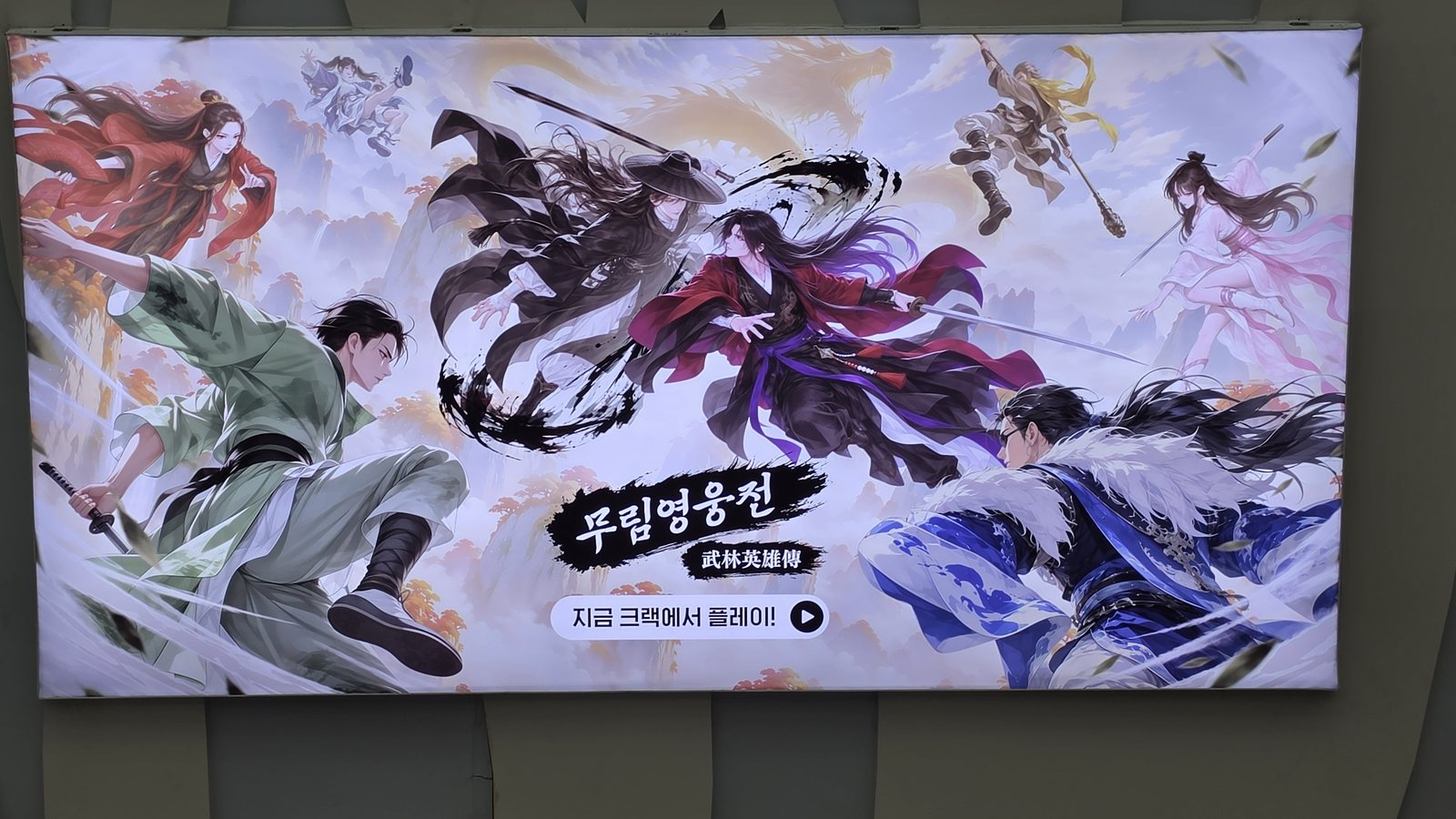
Inside, Crack's booth is built for photos. One set is a night-time city skyline glowing in purple and gold, where a costumed fox-eared character posed with visitors for selfies. Nearby, a misty ink-painting mountain set with a golden dragon throne drew queues for photos with a performer in a red and black martial-arts robe. On the wall hangs the key art for Murim Yeongungjeon (武林英雄傳), a wuxia adventure starring sword-wielding heroes in flowing robes, with one simple call to action: play it now on Crack.
It is a smart fit for this year's G-CON theme, which is narrative. An AI platform built on character stories is paying for a conference about how games tell stories. Whether you find that exciting or uneasy, it is the clearest sign yet of where the money in Korean entertainment is moving.
Who is on the floor
The official leaflet handed to visitors lists every exhibitor in the public (BTC) halls, and reading it is a lesson in how the show has changed.
Exhibition Hall 1 holds the big-name booths: Krafton, HoYoverse, Webzen, Google Play, Team42 and title sponsor Crack, plus Bandai Namco Entertainment, a booth for Tokyo Game Show, VR headset maker Pimax, Muse Dash 2, and energy drink brand Monster Energy. Look further down the list and something else stands out: more than 20 universities, game high schools and academies are exhibiting, from game design departments to specialist schools such as Korea Game Science High School. Public bodies are here too, including the Korea Game Developers Association, the Korea AI Game Association, the Game Rating and Administration Committee and the Korea Copyright Protection Agency. For a young visitor, Hall 1 is as much a careers fair as a game show.
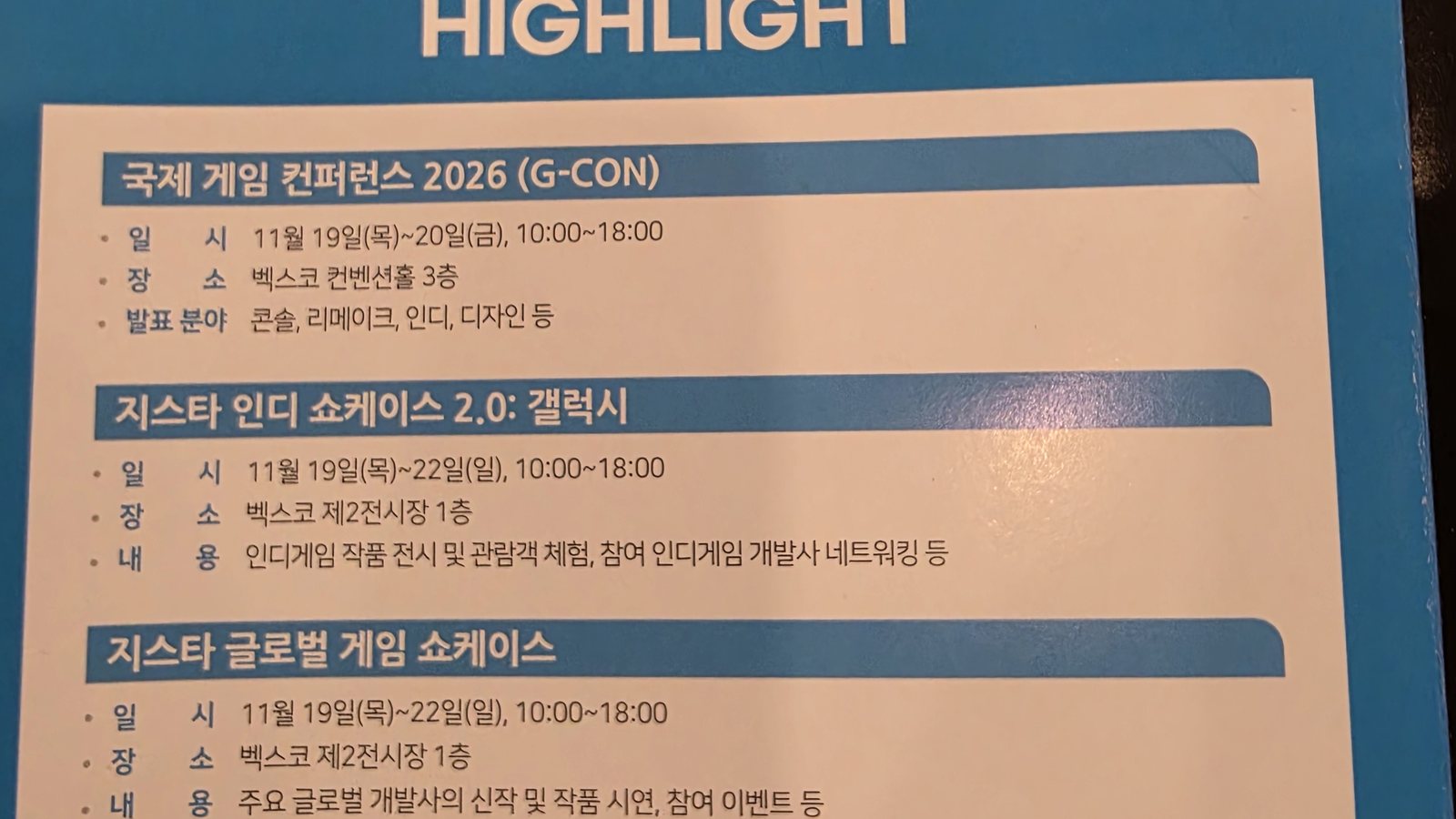
Exhibition Hall 2 is where the global publishers went. Its first floor hosts the new G-STAR Global Game Showcase, with Capcom, CD Projekt Red (listed as CDPR), Koei Tecmo, Sega and NetEase, alongside indie publisher Devolver Digital. The same floor holds Indie Showcase 2.0: Galaxy, a long run of small studios from Korea and abroad, plus a Hyundai Motor booth and the government-backed 2026 Game Culture Festival. Both showcases run every day from 10:00 to 18:00 until Sunday.
The organisers say this year's show brings together 1,237 companies from 41 countries across 3,445 booths. For comparison, the 2025 edition drew around 202,000 visitors over four days.
The names that are missing
Read the Hall 1 list carefully and you will not find Nexon, NCSOFT or Netmarble, three of the companies that defined Korean gaming for two decades and used to anchor the biggest booths at BEXCO. Their absence has been the talk of the Korean games press since the summer, and it explains why the floor plan now leans on international publishers, schools, sponsors and indies.
They are not entirely gone, though. On day two of the conference, Kim Yongha of Nexon Games, the mind behind Blue Archive, shares the stage with Shoji Kawamori, the creator of Macross, for a talk about characters and worlds that last across generations. The giants may have skipped the show floor, but their creators still came to talk.
G-CON: two days of storytellers
If the halls feel lighter than usual, the conference program is the opposite. G-CON runs on 19 and 20 November from 10:00 to 18:00 on the third floor of BEXCO's Convention Hall, and its lineup reads like a wish list for anyone who cares about game stories.
Day one (Thursday 19 November) includes:
- The narrative of The Witcher, with CD Projekt Red's VP and story director Marcin Blacha and narrative director Philipp Weber, on the tropes and stories that inspired the series.
- Crimson Desert, with Pearl Abyss's Geuntae Ahn and Jinho Yoon, on how the team filled the continent of Pywel and scaled open-world creation on its own engine.
- Kim Hyung-tae and Shinji Mikami: a conversation on making games in 2027. The Shift Up CEO behind Stellar Blade meets the creator of Resident Evil, now CEO of Unbound Inc., moderated by YouTuber Moogyeom Kim.
- Creating characters who outlast the story, with Capcom game director Cho Yonghee and film director Park Inje.
- Team NINJA's approach to hardcore action RPGs, with Koei Tecmo producers Masakazu Hirayama and Kohei Shibata.
- How does an unfamiliar world become our own story?, with Tarsier Studios' David Mervik and Supergiant Games' Greg Kasavin and Darren Korb, the team behind Hades.
Day two (Friday 20 November) brings Sucker Punch writers Ariadna Martinez and Joanna Wang; an art panel with Insomniac's Gavin Goulden, Remedy's Elmeri Raitanen and Santa Monica Studio's Bruno Velazquez, moderated by thatgamecompany's Cecil Kim; Ryan and Amy Green on how a deeply personal story became universal; a Final Fantasy VII Remake session with Square Enix producer Yoshinori Kitase; and a closing talk on narrative visualization with Yumi's Cells webtoon creator Lee Donggeon and Pixar senior animator Hyesook Kim.
The program notes that sessions and speakers can change without notice, so check the G-STAR app before you queue.
Outside, the show starts early
Not all the fun is inside. On the plaza in front of Exhibition Center 1, two people in full-body shiny suits, one in Pepsi blue and silver and one in Coca-Cola red, struck rival superhero poses for anyone with a camera. It is a very G-STAR way to start the day. Cosplay gets its own spotlight on Saturday, when the G-STAR Game Cosplay Awards finals run from 15:00 to 18:00 on the special stage on the first floor of Hall 2.
What to watch for the rest of the week
- Friday 20 November: G-CON day two, and the start of the Overwatch Champions Series Asia Stage 3 Grand Finals in the BEXCO Auditorium, which runs until Sunday.
- Saturday 21 November: the busiest public day, the last day of the B2B hall, and the Cosplay Awards.
- Sunday 22 November: the esports finals and the closing numbers.
WGC's take: G-STAR 2026 is a show in transition. Korea's oldest giants have stepped back, an AI storytelling app has stepped up, and the space in between is being filled by global publishers, students and indie developers. That makes this year less about one blockbuster reveal and more about who will shape Korean games next. We will be on the floor every day to find out.