

Inside Crack's G-STAR 2026: An AI Story App Takes Over Korea's Biggest Game Show
The first non-game main sponsor in G-STAR's history built a Hall 1 booth, the only outdoor booth on the plaza and photo zones that queued from the first morning. We walked it on day one.
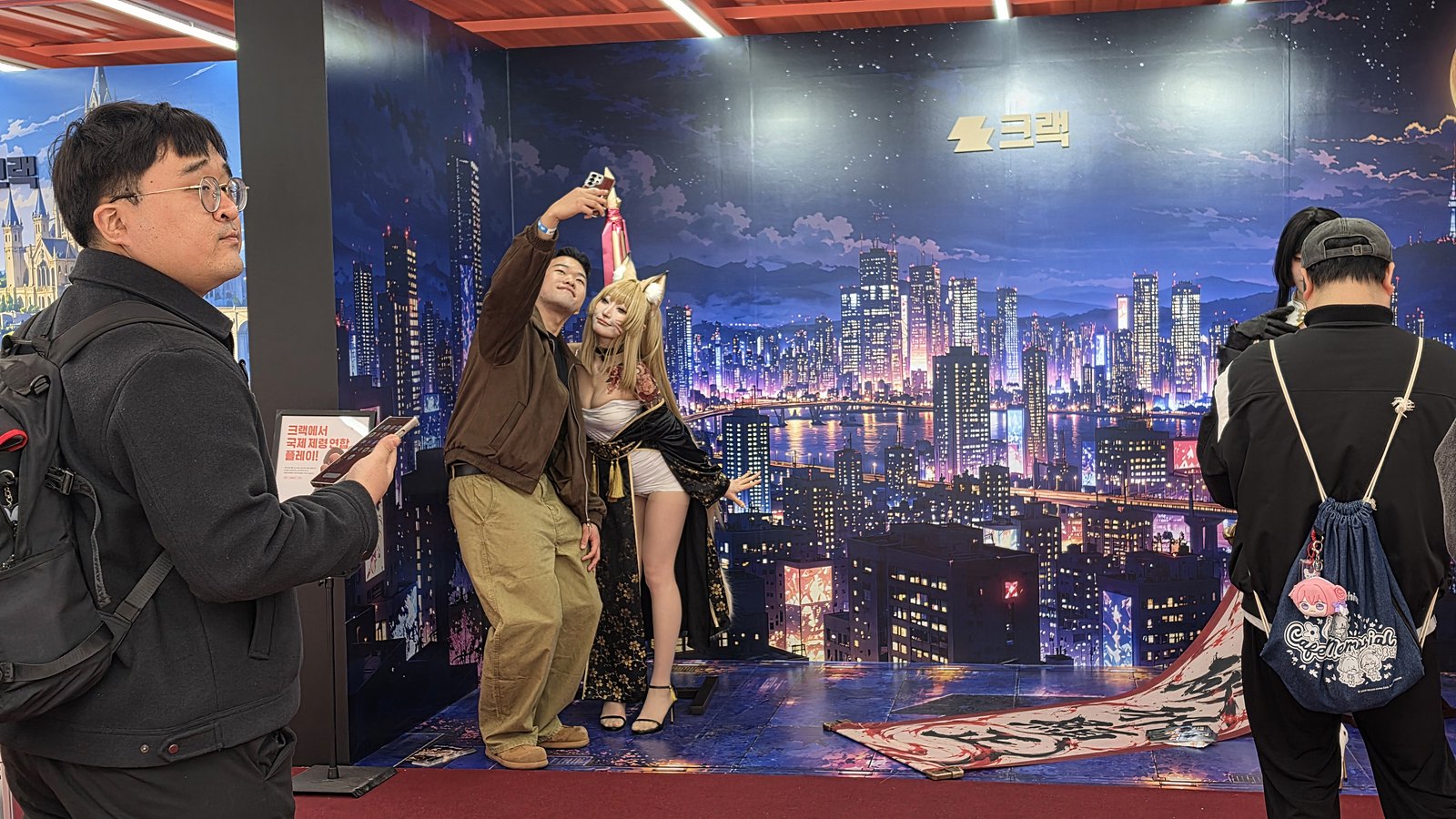
For the first time in G-STAR's 22 years, the company paying for the headline slot does not make video games. Crack, the AI character and story app run by Seoul's Wrtn Technologies, is the main sponsor of G-STAR 2026, and it has spent the money where visitors can see it: a large booth in Exhibition Hall 1, the only outdoor booth on the G-STAR Plaza, and photo zones that were busy from the first morning.
WGC News walked the Crack spaces on opening day. Here is what is there, and why a chatbot company wants to be seen at a game show.
What Crack actually is
Crack is an AI chat platform where users talk to AI characters, build their own characters and write the worlds those characters live in. Wrtn calls it a storytelling platform rather than a game, and its spokesperson told Korean business daily Energy Kyungjae Shinmun that while Crack is not a game service, it shares G-STAR's goals of reaching a wider audience and putting narrative first.
That pitch landed with the organisers. When the sponsorship was announced in August, G-STAR executive director Jeong Seung-woo pointed to AI and narrative as the two themes of this year's show, and said Crack fits both. Crack is also the first sole main sponsor of G-CON, the show's in-house conference, which this year is themed around narrative.
Past main sponsors read like a roll call of Korean gaming: Nexon, NCSOFT, Wemade, Kakao Games and Netmarble, plus Epic Games and Supercell. None of Korea's biggest publishers took the slot in 2026, and several are not exhibiting at all.
Inside the Hall 1 booth
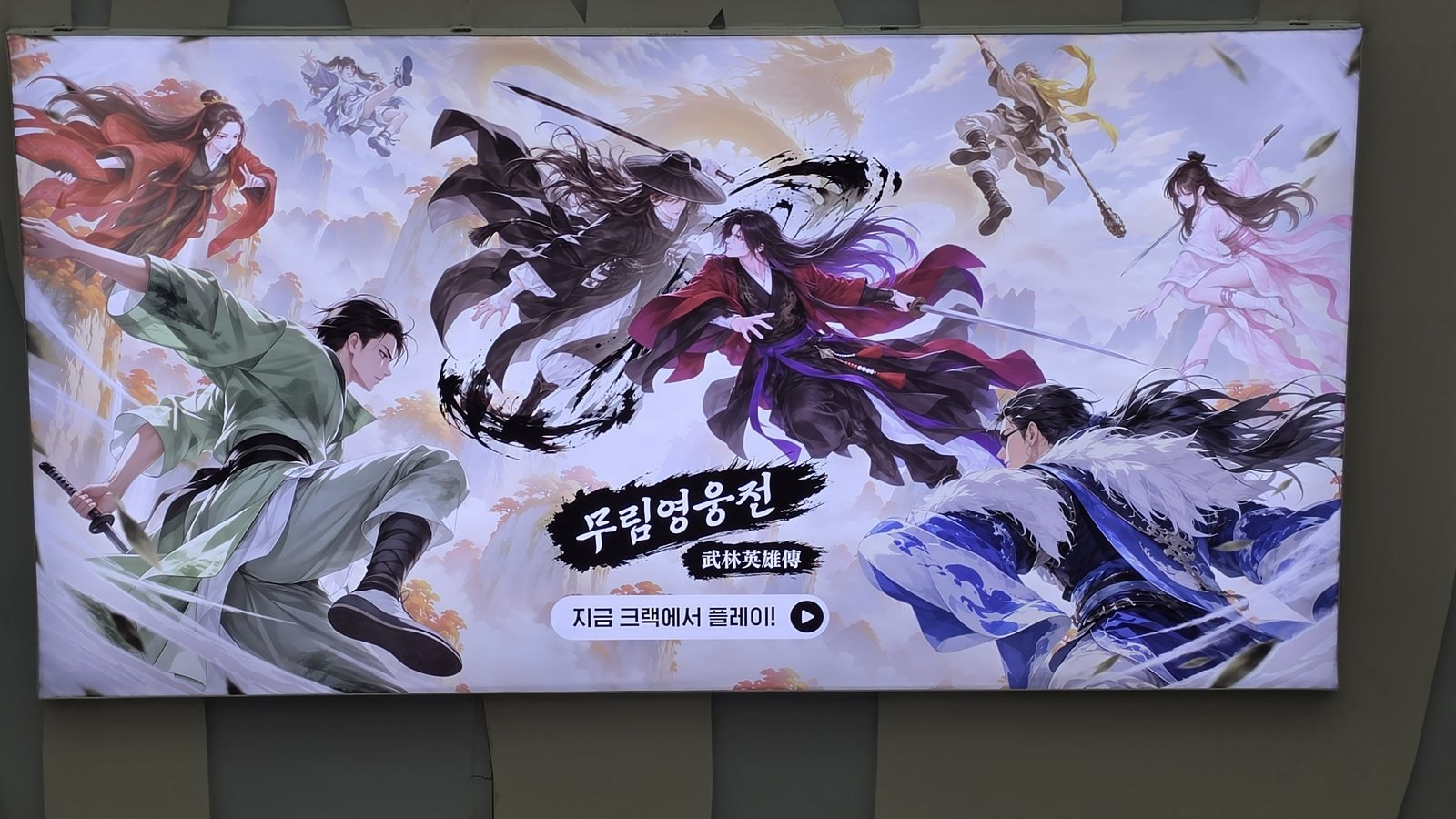
According to an on-site report by Korean games site Gamemeca, the Hall 1 booth is built around Crack's own original stories. Two of them get the most space: International Jeryeong Alliance and Murim Heroes (무림영웅전), a martial-arts saga whose poster we photographed on the show floor.
What you can do there:
- A stamp tour. It sits on the most visible corner of the booth, and you join a waitlist that pings your phone. Complete it and the prize is a long desk mat printed with character art.
- A stat roulette. Hit a black sandbag and a roulette spins your character's stats, a physical take on the random stat growth that is common in AI role-play chats.
- A three-turn escape. In a short AI-driven scenario you are captured by a demon king and have three turns to type your way out.
- A character popularity vote, and a booth mascot, Eri.
Gamemeca also noted two less flattering details: the rest lounge takes up roughly half of the floor space, and the playable demo seats had plenty of empty chairs when its reporter visited.
The photo zones are the real draw
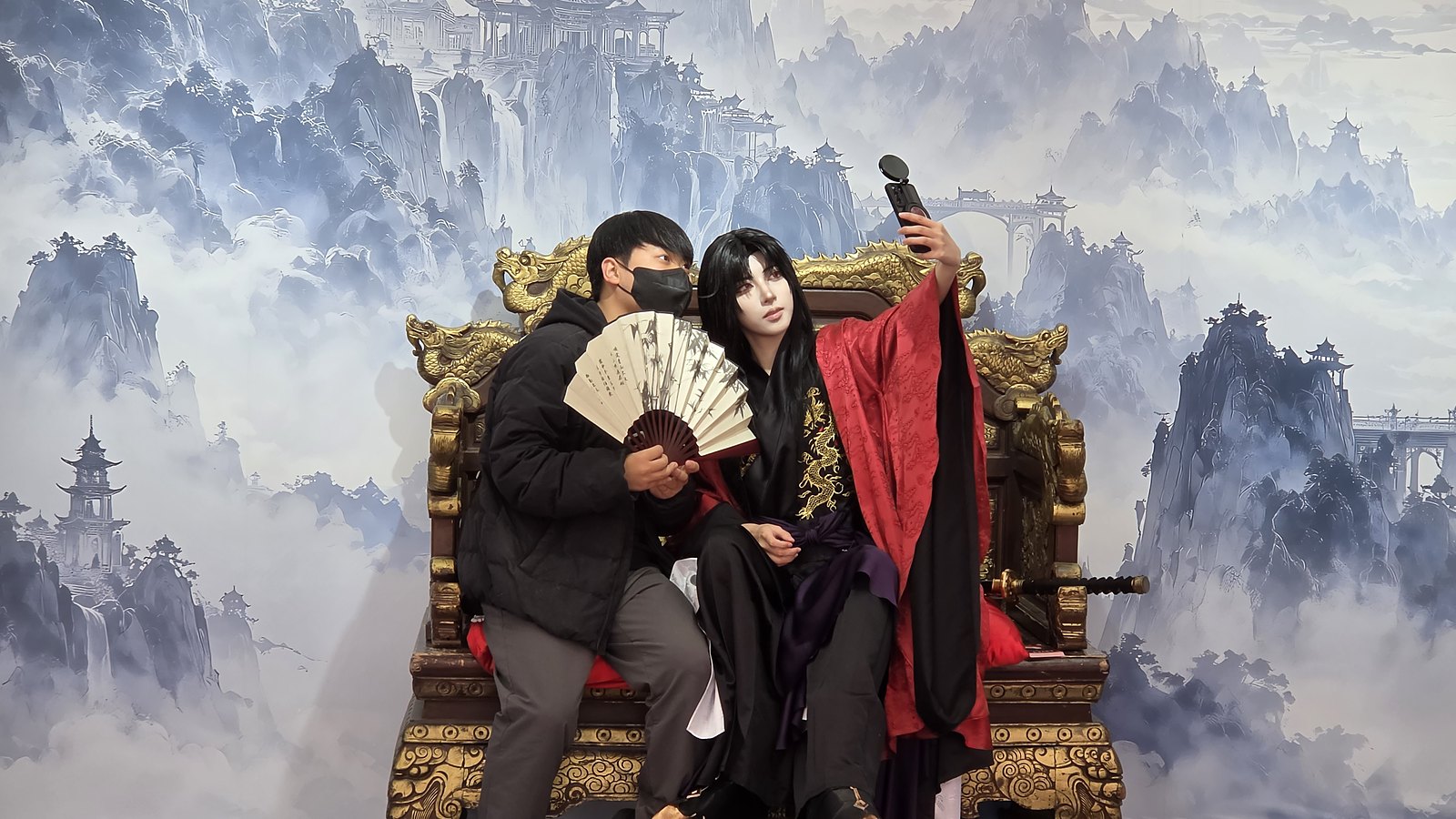
If the demos were quiet, the photo zones were not. Crack's walls recreate its story worlds at full scale: a misty martial-arts mountain range with a carved golden throne, and a neon night city skyline under the Crack logo. Both drew a steady line by late morning on Thursday, with cosplayers posing for visitors' selfies and photographers working the line.
That is the clearest sign of what Crack wants from Busan. G-STAR's organising committee chair Cho Young-ki said in August that the goal was not simply to push visitors from around 200,000 to 250,000, but to widen the audience beyond core gamers. A queue of fans taking pictures in front of a Crack logo is exactly that.
Why it matters
Crack's sponsorship is the biggest single sign of how G-STAR is changing. With Nexon, NCSOFT and Netmarble absent, the show's money and floor space are coming from global publishers, platform holders and, now, an AI company. Whether that is a one-off or the new normal will depend on whether brands like Crack see real sign-ups from four days in Busan.
Fun fact: Crack's booth screens also showed the girl band QWER, but that was a relay. The live concert was happening over in Exhibition Hall 2.
WGC's take: Crack has bought itself the most visible spot at Korea's biggest game show without shipping a traditional game. The photo walls work. The demos need a better hook if Crack wants players, not just pictures.